Nissan
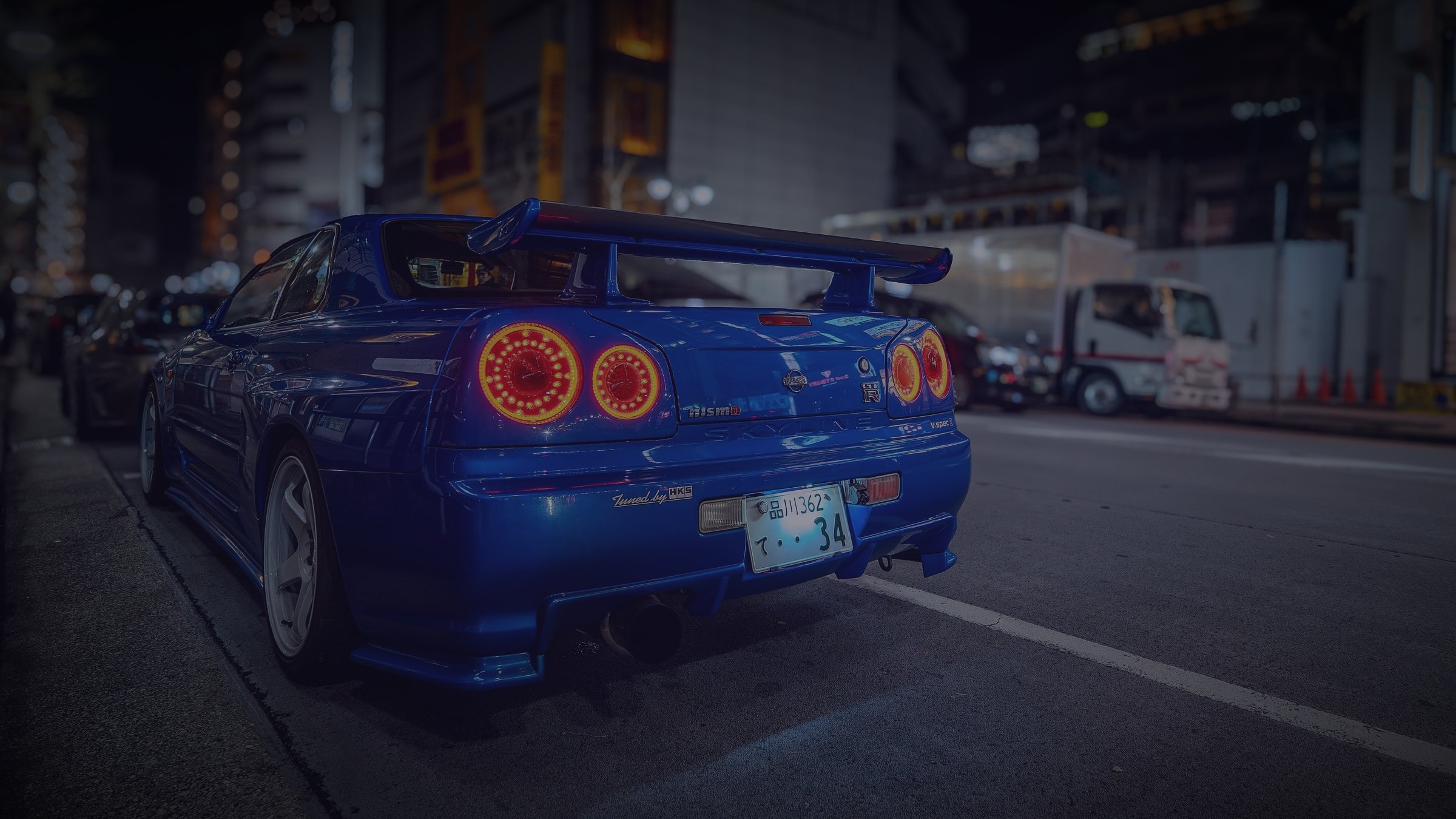
Nissan Skyline GT-R
The Nissan Skyline GT-R came back in 1989 as the R32 and spent the next thirteen years as the benchmark.
Photo: David Kernan, CC BY 4.0, via Wikimedia Commons. Colour graded.

Articles
For fifteen years, almost every fast Japanese car was advertised with the same power figure. The 280 PS gentlemen's agreement, often quoted abroad as the 276 hp limit, was never a law, and plenty of the cars it covered are reported to have made more. This article separates what is documented from what is repeated.
In the late 1980s, Japan's carmakers agreed among themselves to advertise no more than 280 PS (276 hp) for cars sold at home. The sources do not agree on the year: Wikipedia gives 1988, CarThrottle and Jalopnik give 1989 (sources 1, 2, 5). They do agree that it was never a law. CarThrottle says it was not legally binding, and Wikipedia calls it voluntary self-restraint (sources 1, 2). The body named behind it is JAMA, the Japan Automobile Manufacturers Association (sources 1, 2, 3).
The reason usually given is road safety. CarThrottle and The News Wheel both put Japan's road deaths at more than 10,000 a year in the years before the agreement (sources 1, 3), and CarThrottle adds that the cap was meant to head off a horsepower war (source 1). The same package limited top speed to 180 km/h, a limit Wikipedia says still applies (sources 1, 2). None of our sources quotes a JAMA document that sets the cap out, so its exact wording is unknown.
The News Wheel says the agreement was timed to coincide with the launch of a new Nissan Fairlady Z (source 3). The R32 Skyline GT-R, which went into production in August 1989, was rated at the same 280 PS (source 7). By the mid-90s the figure was everywhere: the Mitsubishi GTO, the Honda NSX with a manual gearbox and the A80 Supra RZ were all rated at 280 PS in Japan (sources 8, 9, 10).
The one independent measurement in our sources is Doug DeMuro's 2015 test of his own 1989 R32 GT-R, standard apart from the exhaust, on a four-wheel-drive dyno at a tuning shop. It made 281 hp at the wheels, on three runs. DeMuro puts that at roughly 320 hp at the crank, using a rule of thumb that about 15 percent is lost through the drivetrain. That last figure is an estimate, not a measurement (source 5).
The carmakers' own export figures point the same way. The GTO was rated at 280 PS in Japan (source 8), while the 1994 3000GT VR-4 sold in North America was listed at 324 PS (source 11); CarThrottle says the export car made its higher figure with no mechanical changes (source 1). The Supra RZ was rated at 280 PS in Japan and the export Supra Turbo at 325 PS (source 10). For the GT-R, Wikipedia says enthusiasts have long believed the RB26DETT made closer to 320 PS by the end of production (source 12).
Other figures are repeated widely without a measurement behind them. CarThrottle mentions anything from 300 bhp for the R32 GT-R to more than 350 bhp for the R34, and around 300 bhp for the A80 Supra, and says these depend on which sources you believe (source 1).
With the headline figure fixed, the numbers that moved were elsewhere. The R32 GT-R's torque was 353 Nm; the R34's was 392 Nm, with power still listed at 280 PS (sources 13, 14). DeMuro makes the same point about the R33: a new design, new suspension and a new all-wheel-drive system, and the same power figure (source 5). One engineering writer argues that the makers kept peak power at 280 PS while reshaping the torque curve beneath it (source 4).
The cap also had exceptions. CarThrottle says the makers' in-house tuning arms were exempt, and gives the Nismo 400R, rated at 400 PS, as an example (source 1).
Honda launched a new Legend on 7 October 2004, rated at 300 PS (source 6). Honda's own announcement does not mention the agreement, but CarThrottle and other writers treat the Legend as the car that ended it (sources 1, 4). The News Wheel reports that in July 2004 Itaru Koeda, a former JAMA chairman, said JAMA had found no link between speed and road deaths, and called for the agreement to end (source 3). Wikipedia says the power limit was lifted in 2004, while the 180 km/h limit remains (source 2). Within a few years the figures had moved a long way: CarThrottle notes that the R35 GT-R of 2007 arrived with 473 bhp (source 1).
Nissan
The Nissan Skyline GT-R came back in 1989 as the R32 and spent the next thirteen years as the benchmark.
Photo: David Kernan, CC BY 4.0, via Wikimedia Commons. Colour graded.
Toyota
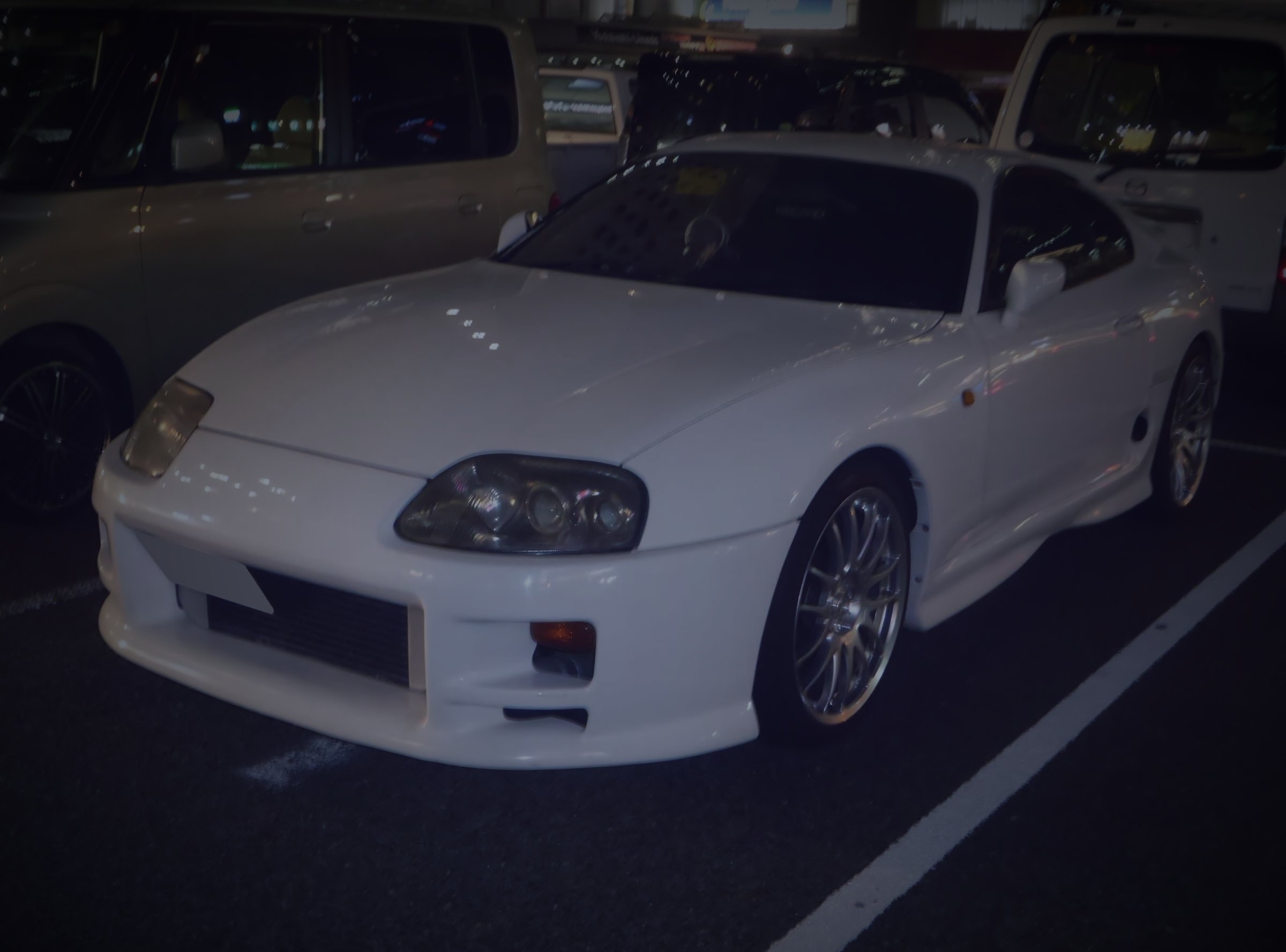
The Toyota Supra A80 is the car that made the 2JZ-GTE famous, and the engine returned the favour.
Photo: Tokumeigakarinoaoshima, CC0 1.0, via Wikimedia Commons. Colour graded.
One short email when something new goes live. Nothing else.
No newsletter. Unsubscribe with one click.

