Articles

The aero houses: a guide to 90s Japanese body kit makers

90s Japanese body kits came from small companies with strong opinions. Some started in racing and shaped their parts for the track; others cared about nothing but how a car looked parked under a streetlight. This guide covers the makers, their signature styles and the cars each is known for.

Where aero came from

Body kits are older than the Japanese scene. Wikipedia traces them to American custom cars of the 20th century, and notes how many take their cues from racing cars (source 1). In Japan, the makers covered here came at it from several directions. RE Amemiya started as a rotary tuner and went racing in Super GT (source 2). Top Secret built its name on top-speed runs (sources 4, 5). VeilSide began with tuning parts and won its first prize at the Tokyo Auto Salon, the country's big tuning show (source 3).

The makers

This list covers the makers we could document from sources. Others often named alongside them are left out until we can.

VeilSide. Started in 1990 and based near the Tsukuba circuit (source 3). It first sold suspension and engine parts, took the Grand Prize in the tuned car category at the 1991 Tokyo Auto Salon, and won again in 1994 with its Supra "Combat" design (source 3). It received the Ministry of Transport's approval to make and sell aero parts in July 1995. Its best-known kit, the Fortune, replaces every body panel except the roof; Wikipedia lists versions for the FD RX-7, the A80 Supra and the NSX, among others (source 3). Wikipedia says its founder, Hironao Yokomaku, drew on the 1960s Batmobile (source 3).

RE Amemiya. Founded in 1974 by Isami Amemiya in Tomisato, Chiba, and known for its work on rotary-engined Mazdas; the RE stands for rotary engine (source 2). It raced a three-rotor RX-7 in Super GT from 1995, as the series' only rotary entry, and has run in the D1 Grand Prix since 2004 (source 2). In Initial D, the Takahashi brothers' FD and FC RX-7s wear RE Amemiya body kits (source 2).

Top Secret. Founded by Kazuhiko "Smokey" Nagata, who started out working on cars after hours at the tuner Trust; Wikipedia says the company became independent in 1991 and set up in Chiba (sources 4, 5). It has run speed trials since 1994, mostly with A80 Supras, and Nagata reached 358 km/h at the Nardò test track in Italy in a V12-engined Supra (sources 4, 5). That car wore Top Secret's own G-Force body kit, 33 mm wider than standard at the front and 55 mm at the rear (source 4). Gold paint is kept for the projects Nagata rates as his best (sources 4, 5).

ORIGIN Labo. Its DRIFT LINE kits, a front bumper, side steps and rear bumper in fibreglass, are made for the S13 180SX, the early S14 and the S15 Silvia (sources 6, 7, 8), and it also makes a full kit for the FD RX-7 (source 9).

Vertex. Kits for the S15 Silvia and the FD RX-7, including the EDGE wide body for the S15 and the Ridge wide body for the FD, are listed by retailers (sources 10, 11, 12).

Varis. Its wide body for the A80 Supra replaces the front wings, side skirts, rear wings and doors (source 13).

Styles, and how to tell them apart

The makers' own names and records point to four styles. Circuit and time-attack parts are made to work at speed; Top Secret says it has built cars for the street, drag strip, circuit, drifting and top speed (source 5). Drift kits are made for cars that spend their lives sideways, which is where ORIGIN Labo's DRIFT LINE gets its name (source 6). Top-speed cars are shaped for the long straight, as Top Secret's runs show (source 4). Show cars are built to be looked at, and the Tokyo Auto Salon is where VeilSide made its name (source 3). Wikipedia notes that some kits are made to improve a car's performance and others purely for looks (source 1).

Find kits by car

Each model page lists the kits made for that car, by maker, with a link to the maker or a documented example.

Cars in this article

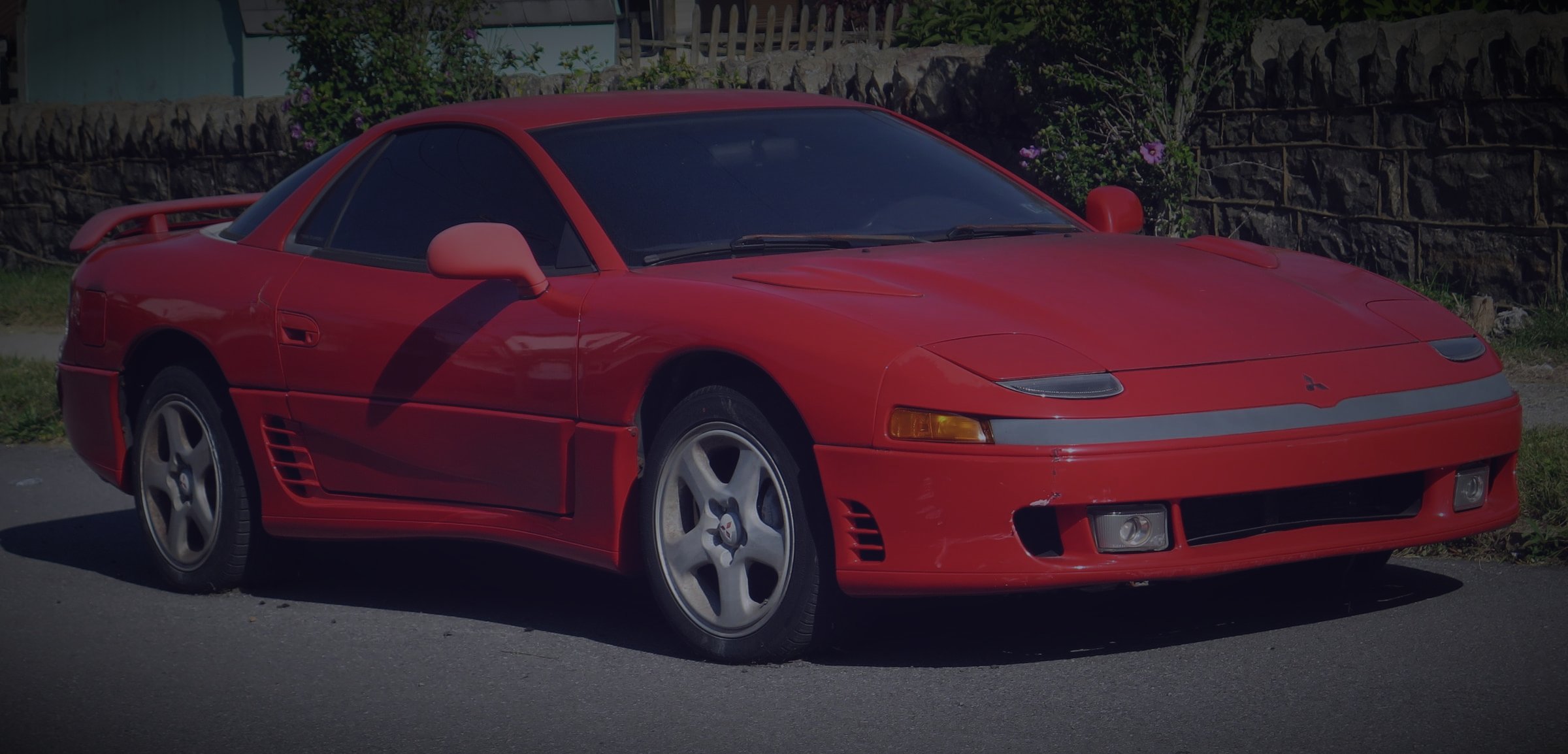
Red 1992 Mitsubishi 3000GT VR-4, front three-quarter view

Mitsubishi

Mitsubishi 3000GT

The Mitsubishi 3000GT, sold in Japan as the GTO, was the car that got everything: twin turbos, all-wheel drive, four-wheel steering and aero that moved on its own.

Photo: Cutlass, CC0 1.0, via Wikimedia Commons. Colour graded.

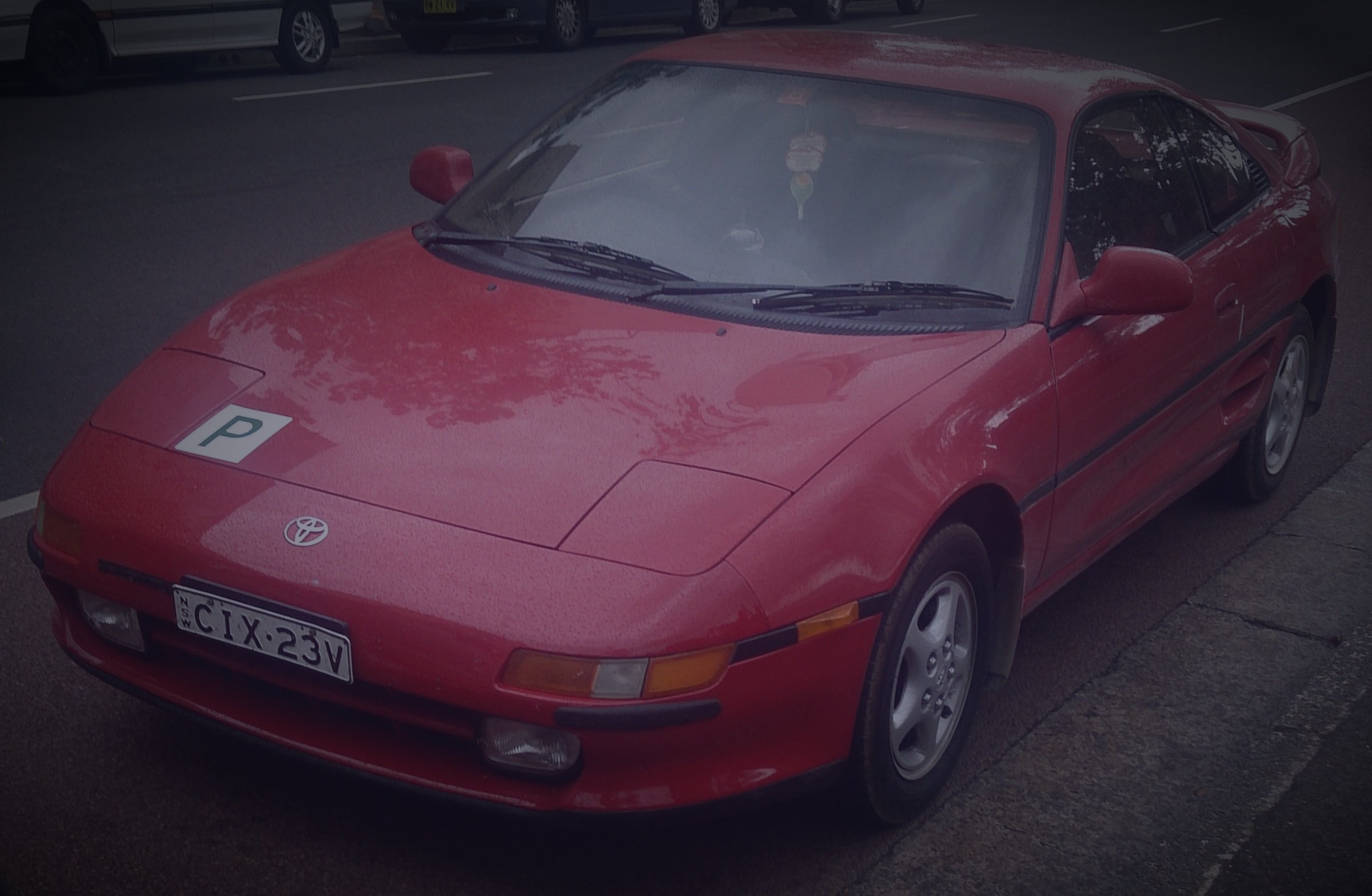
Red Toyota MR2 SW20 G-Limited, front three-quarter view

Toyota

Toyota MR2

The Toyota MR2 put the engine behind the driver at a price ordinary buyers could reach, across three generations: the AW11, the SW20 and the ZZW30.

Photo: FotoSleuth, CC BY 2.0, via Wikimedia Commons. Colour graded.

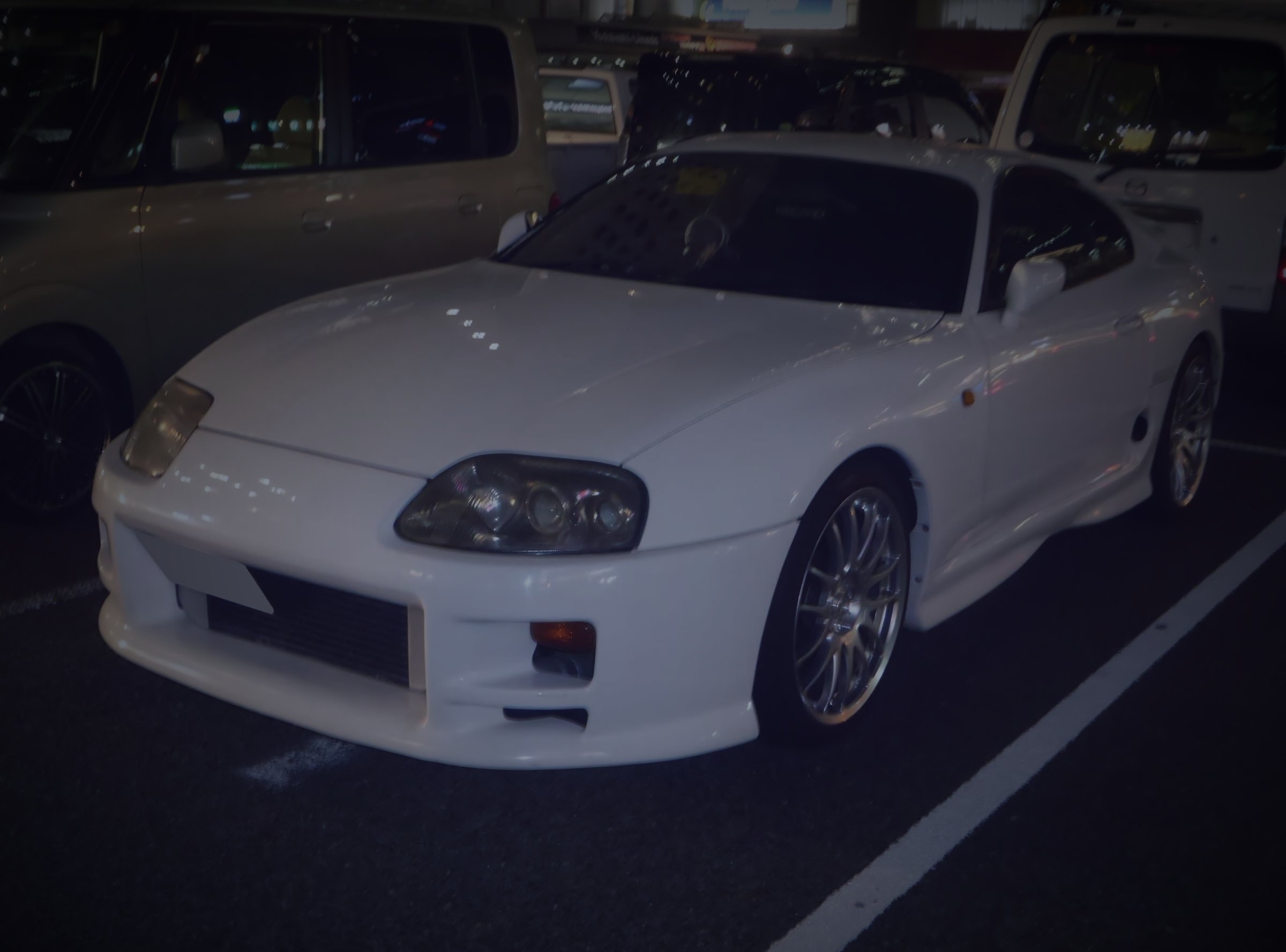
Tuned white Toyota Supra A80, front three-quarter view at night

Toyota

Toyota Supra

The Toyota Supra A80 is the car that made the 2JZ-GTE famous, and the engine returned the favour.

Photo: Tokumeigakarinoaoshima, CC0 1.0, via Wikimedia Commons. Colour graded.

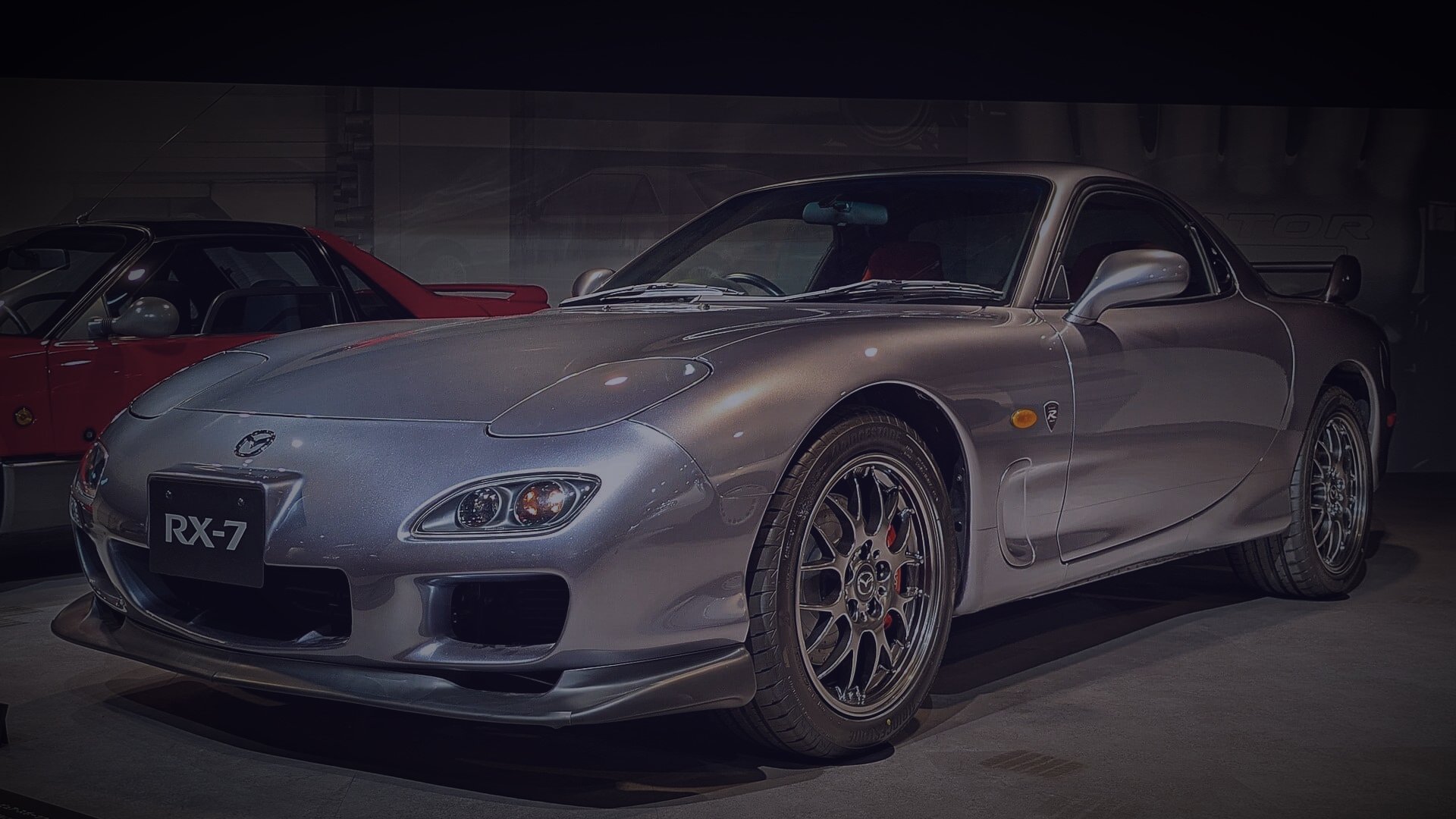
Silver Mazda RX-7 Spirit R (FD3S), front three-quarter view at the Mazda Museum

Mazda

Mazda RX-7

The Mazda RX-7 is the rotary sports car: three generations, all powered by an engine nobody else would commit to.

Photo: Aos.1905, CC BY 4.0, via Wikimedia Commons. Colour graded.

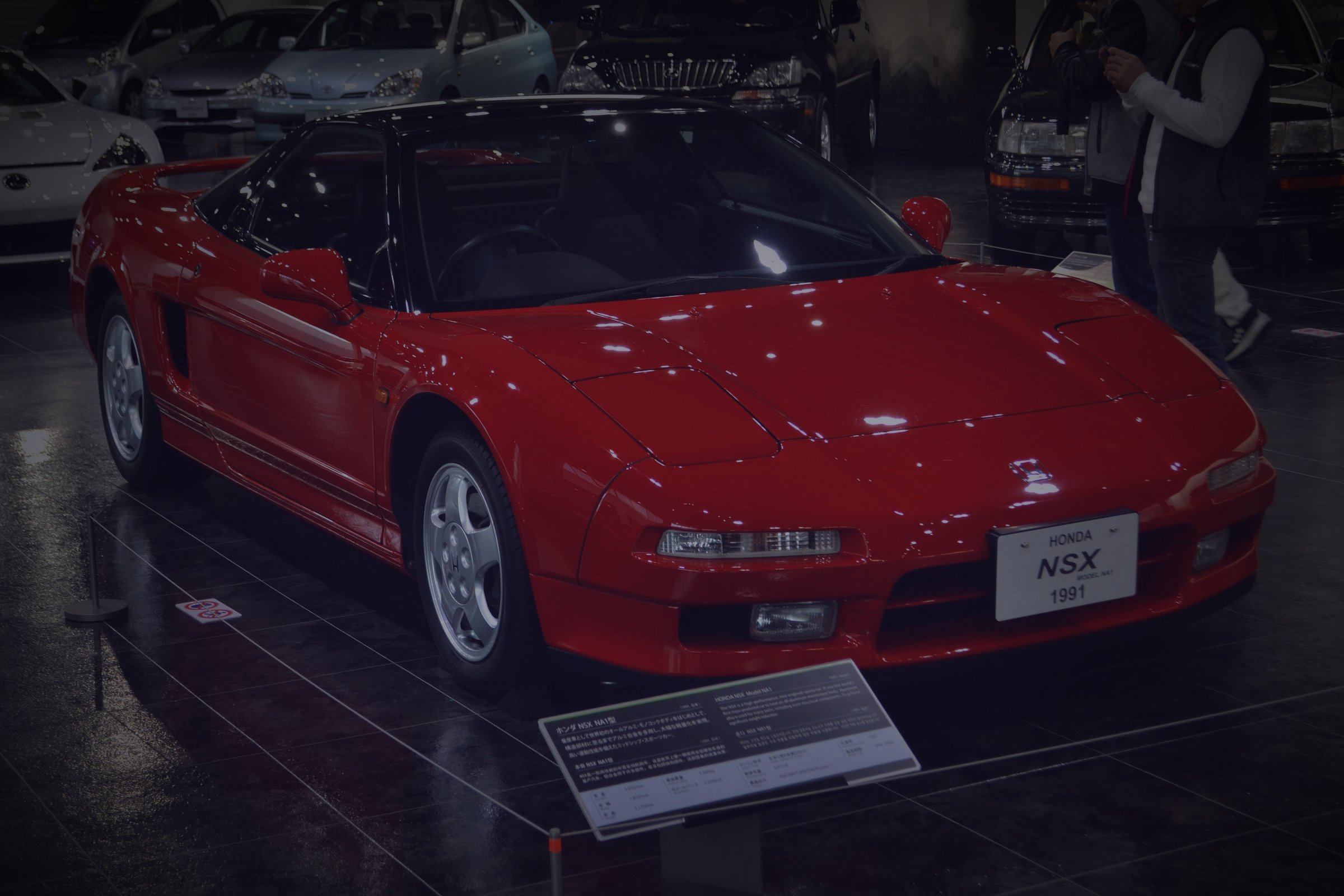
Red 1991 Honda NSX (NA1), front three-quarter view at the Toyota Automobile Museum

Honda

Honda NSX

The Honda NSX took on the mid-engine supercar with an aluminium body, a VTEC V6 and the idea that such a car could be driven every day.

Photo: 先従隗始, CC0 1.0, via Wikimedia Commons. Colour graded.